




Practical Guide: Efficient Water Heating and Thermal Management Solutions
As demand for thermal comfort and energy efficiency grows, water heating technologies have become crucial in residential, commercial, and leisure settings. In this article we explain the advantages, limitations, and selection criteria for different systems: DHW (Domestic Hot Water) heat pumps, electric storage water heaters, coil storage tanks, thermal buffers (inertia tanks), and pool heat pumps. The goal of this guide is to help installers, technicians, and decision-makers choose the most appropriate solution for each context.
22 September 2025
1. DHW Heat Pumps
What they are:
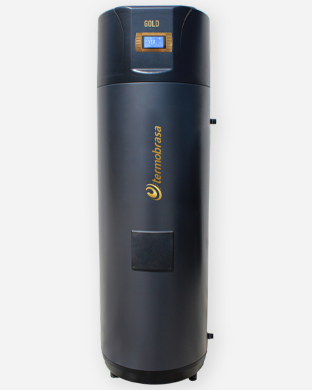
Monobloc units where the evaporator is attached to the water tank. The evaporator extracts heat from ambient air and transfers it to the water through a heat exchanger that surrounds the outside of the tank.
Typical capacities
100L, 150L and 500L.
Key advantages
What they are:
Monobloc units where the evaporator is attached to the water tank. The evaporator extracts heat from ambient air and transfers it to the water through a heat exchanger that surrounds the outside of the tank.
Typical capacities
100L, 150L and 500L.
Key advantages
- Up to ~4× lower energy consumption compared with electric storage heaters or gas water heaters.
- Produces hot water at 55–60 °C year-round, even in cold conditions, without continuous use of electric resistance (used only for backup).
- Approximately 75 % of the energy required is extracted from the environment.
- A+ Energy class
- Remote control (smartphone app)
- Electronic or sacrificial anode for corrosion protection
- Durable tank materials (stainless steel, vitrified, copper)
- High-efficiency thermal insulation
2. Electric Storage Water Heaters
When they are suitable?
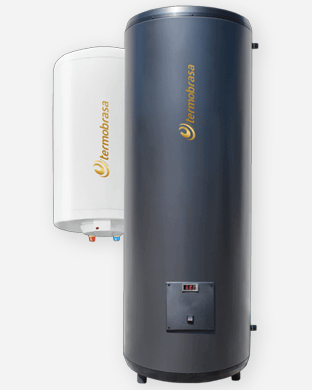
From 10 L to 75 L for small volumes; up to 500 L when larger capacity is needed.
Key advantages
When they are suitable?
- Small apartments or infrequent use (holiday homes, weekend properties)
- Sites with low hot water demand or where high upfront investment is not justified
From 10 L to 75 L for small volumes; up to 500 L when larger capacity is needed.
Key advantages
- Simple and quick installation
- Flexible installation options (vertical, horizontal, wall-mounted, or floor-standing)
- Available in single-phase or three-phase versions
- Tanks made of stainless steel or copper with efficient insulation
- Higher energy cost if used intensively or for large volumes.
3. Storage Tanks with Coil (Heat Exchanger)
What they offer?
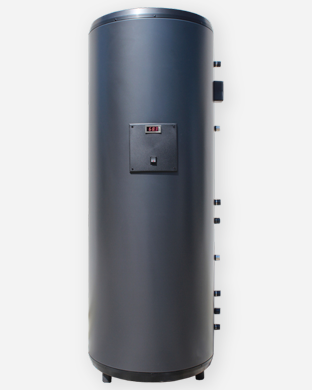
These tanks can be connected to external heat sources such as solar thermal panels, boilers, or heat pumps, enabling hybrid systems.
Relevant models
What they offer?
These tanks can be connected to external heat sources such as solar thermal panels, boilers, or heat pumps, enabling hybrid systems.
Relevant models
- Single or multiple coils (1, 2, or 3)
- “Plus” versions with high-performance coils
- Compact versions for spaces with limited footprint
- Integration in hybrid systems, enabling optimized energy use
- Lower operational costs when paired with renewable energy sources
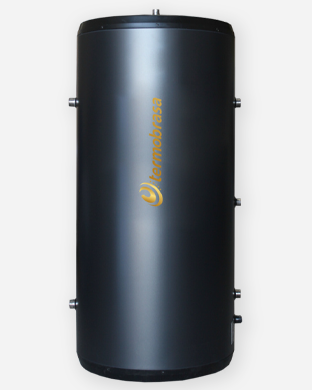
4. Thermal Buffer Tanks (Inertia Tanks)
Main function
These tanks store thermal energy produced by various heat sources, stabilizing heating systems and reducing frequent start/stop cycles.
Typical applications:
Larger buildings, installations with multiple heat sources, and combinations such as boiler + heat pump.
What to look for?
Main function
These tanks store thermal energy produced by various heat sources, stabilizing heating systems and reducing frequent start/stop cycles.
Typical applications:
Larger buildings, installations with multiple heat sources, and combinations such as boiler + heat pump.
What to look for?
- Tank material: stainless steel or carbon steel
- Efficient insulation
- Flexible configurations (number of inlets/outlets)
- Optional electric resistance for backup support
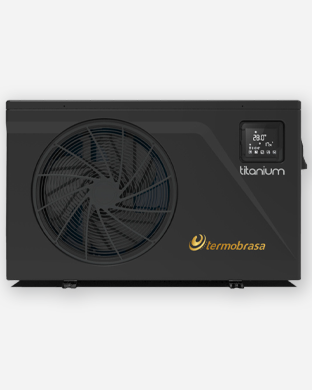
5. Pool Heat Pumps
Why choose them?
Pool heat pumps allow keeping water at a comfortable temperature with low energy use, even in colder seasons.
Typical operating ranges
Why choose them?
Pool heat pumps allow keeping water at a comfortable temperature with low energy use, even in colder seasons.
Typical operating ranges
- Ambient air: approximately −7 °C to +43 °C
- Water temperature: approximately 9 °C to 40 °C
- App control or module
- Wi-Fi and touch-display interface
Best Practices for Selection and Installation
- Assess the hot water consumption profile (litres/day, number of users).
- Check the minimum ambient temperature at the installation site for heat pumps or external models.
- Ensure adequate space for ventilation (for DHW heat pumps) or coil systems.
- Correctly size the tank: capacity and heat recovery rate.
- Install corrosion protection (anode, compatible materials).
- Verify local regulations and available financial incentives for efficient systems.
Conclusion
CEach solution has its place in professional applications:
CEach solution has its place in professional applications:
- For maximum efficiency and continuous use, DHW heat pumps are highly competitive.
- Electric storage heaters are useful as complementary or occasional solutions.
- Hybrid systems with coils or inertia tanks provide flexibility and integration.
- For properties with pools, dedicated heat pumps offer comfort with economy.
If you are planning to install or upgrade a domestic hot water system or a pool heating solution, contact us. Nortécnica can support you in defining the most suitable technical solution, provide competitive pricing, and develop a complete system design tailored to your project.