



















Structured Cabling: The Foundation of Any Modern Building
In a context where video surveillance systems, communications, access control, and IoT equipment all rely on dependable connectivity, structured cabling has evolved from being an optional feature to a core project requirement. This article provides an overview of structured cabling systems, covering their composition, main components, key criteria for selecting data cables, and best practices that can help reduce costs and additional work in the long term.
20 October 2025
What Are Structured Cabling Systems?
A structured cabling system is an organized and hierarchical infrastructure designed to support communication services (data, voice, video) in a centralized way. Instead of multiple ad-hoc solutions and scattered cabling, structured networks follow defined principles of topology, termination, and labeling that simplify management, maintenance, and future expansions.
The design and installation of data networks in buildings are regulated by international standards, which also influence the specific guidelines adopted in Portugal.
In Portugal, the regulatory authority for electronic communications is ANACOM, which approves and publishes the ITED/ITUR manuals. These documents define the prescriptions and recommendations for implementing telecommunications infrastructures in buildings and residential developments.
A structured cabling system is an organized and hierarchical infrastructure designed to support communication services (data, voice, video) in a centralized way. Instead of multiple ad-hoc solutions and scattered cabling, structured networks follow defined principles of topology, termination, and labeling that simplify management, maintenance, and future expansions.
The design and installation of data networks in buildings are regulated by international standards, which also influence the specific guidelines adopted in Portugal.
In Portugal, the regulatory authority for electronic communications is ANACOM, which approves and publishes the ITED/ITUR manuals. These documents define the prescriptions and recommendations for implementing telecommunications infrastructures in buildings and residential developments.
Components of a Structured Cabling System
In a typical installation, you may find the following elements:
In a typical installation, you may find the following elements:
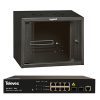
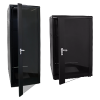
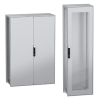
- Rack Cabinet: A lockable cabinet with modular features that houses telecommunications equipment and allows for organized management.
- Cabling: Can include three main cable technologies — copper pairs (UTP/STP), coaxial cable, and fiber optic cable.
- Patch Panels: Devices used to group and interconnect equipment or outlets using patch cords.
- Patch Cords and Connectors: Used to establish connections between panels and equipment.
- Active Equipment: Such as modems, routers, switches, hubs, and gateways.
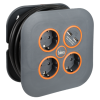
- PDUs (Power Distribution Units): Power strips designed to supply electrical energy to the equipment.
- Accessories: Ventilation kits, casters, cable management panels, organizers, shelves, and other accessories that enhance functionality and organization.
Cable Selection: Key Criteria
Choosing the right cable depends on several factors, including required bandwidth, connection distances, electromagnetic interference resistance, and fire safety or durability requirements.
Choosing the right cable depends on several factors, including required bandwidth, connection distances, electromagnetic interference resistance, and fire safety or durability requirements.
- Cat 6: Introduced to offer better performance and reliability compared to Cat 5e. A well-balanced option between cost and performance.
- Cat 6A: Recommended for higher transmission speeds or improved interference immunity. Available in shielded versions for environments with high electromagnetic noise.
- Cat 7: Although not officially recognized by standards such as EIA or TIA, this category provides superior shielding and frequency performance compared to Cat 6A. Ideal for industrial environments or high-bandwidth applications.
- Cat 8: Designed for short, ultra-high-speed connections. Typically used in data center environments.
- Fiber Optic:
- Multimode – used in local networks and data centers.
- Singlemode – used for backbone connections between floors or buildings, especially when distances exceed copper cable limits. Immune to electromagnetic interference.
- Coaxial Cable: Still relevant for TV distribution applications, offering durability and ease of installation.
Installation Best Practices
Best practices for installing structured cabling systems include careful planning, the use of high-quality materials, and strict compliance with technical standards.
Best practices for installing structured cabling systems include careful planning, the use of high-quality materials, and strict compliance with technical standards.
- Plan Ahead: Define technical rooms, termination points, and cable routes in advance. Always leave room for future expansion.
- Define the Layout: Map equipment locations, access points, and cable paths. Identify where to place floor or rack cabinets.
- Choose Quality Equipment: Use certified, high-quality materials to ensure performance and durability.
- Handle Cables Carefully: Respect the manufacturer’s bending radius and pulling force limits. Avoid tight bends, knots, or twists.
- Keep Cabling Organized: Use management accessories such as guide panels and vertical or horizontal organizers to maintain a tidy setup.
- Ensure Proper Termination: Perform terminations using appropriate tools and compatible components. Use connectors and patch panels certified for the same category, and always follow the manufacturer’s guidelines.
Conclusion
A well-designed and properly maintained structured cabling system ensures reliability, scalability, and reduced operational costs. To achieve this, it’s essential to choose suitable components from reputable, experienced, and certified manufacturers.
A well-designed and properly maintained structured cabling system ensures reliability, scalability, and reduced operational costs. To achieve this, it’s essential to choose suitable components from reputable, experienced, and certified manufacturers.
Explore our full range of structured cabling products, with solutions suitable for all types of installations.
Contact us for technical support or advice when developing your projects.
Contact us for technical support or advice when developing your projects.